Welcome
This short guide will help you understand the process that Valley Link undergoes for routing new electric transmission lines - from developing options to gaining final approval. Click on the NEXT button below to get started.
Study Area
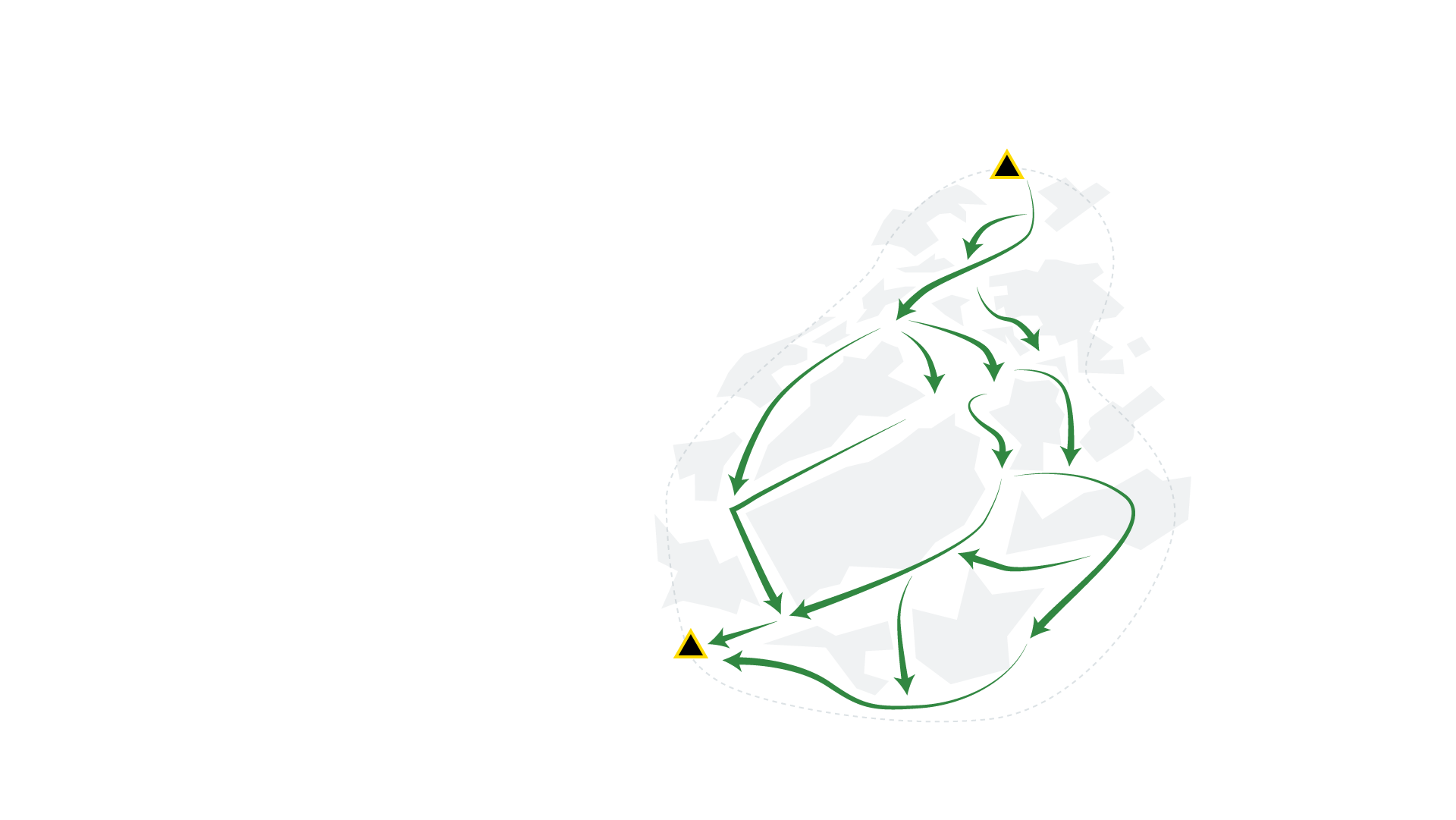
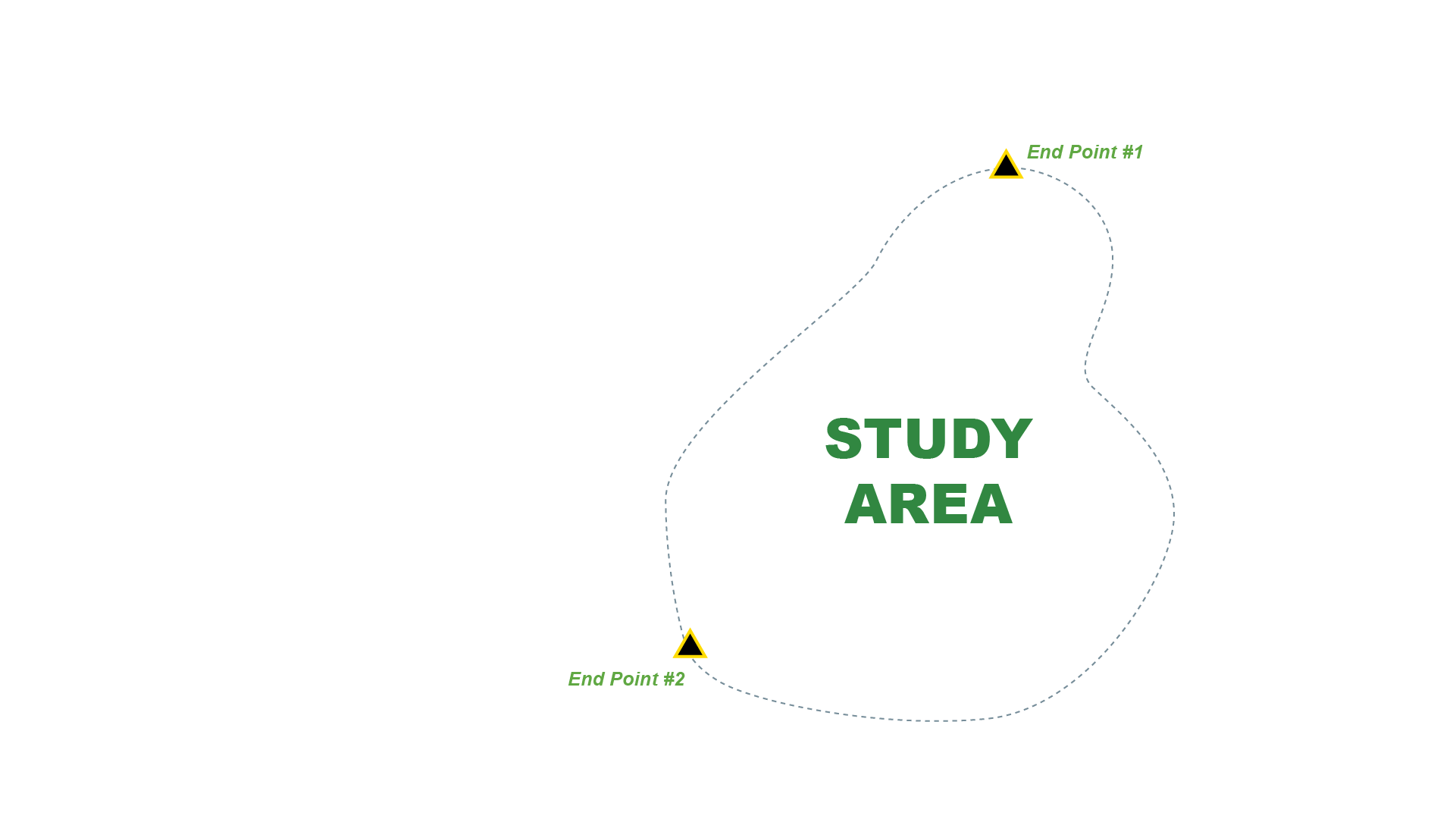
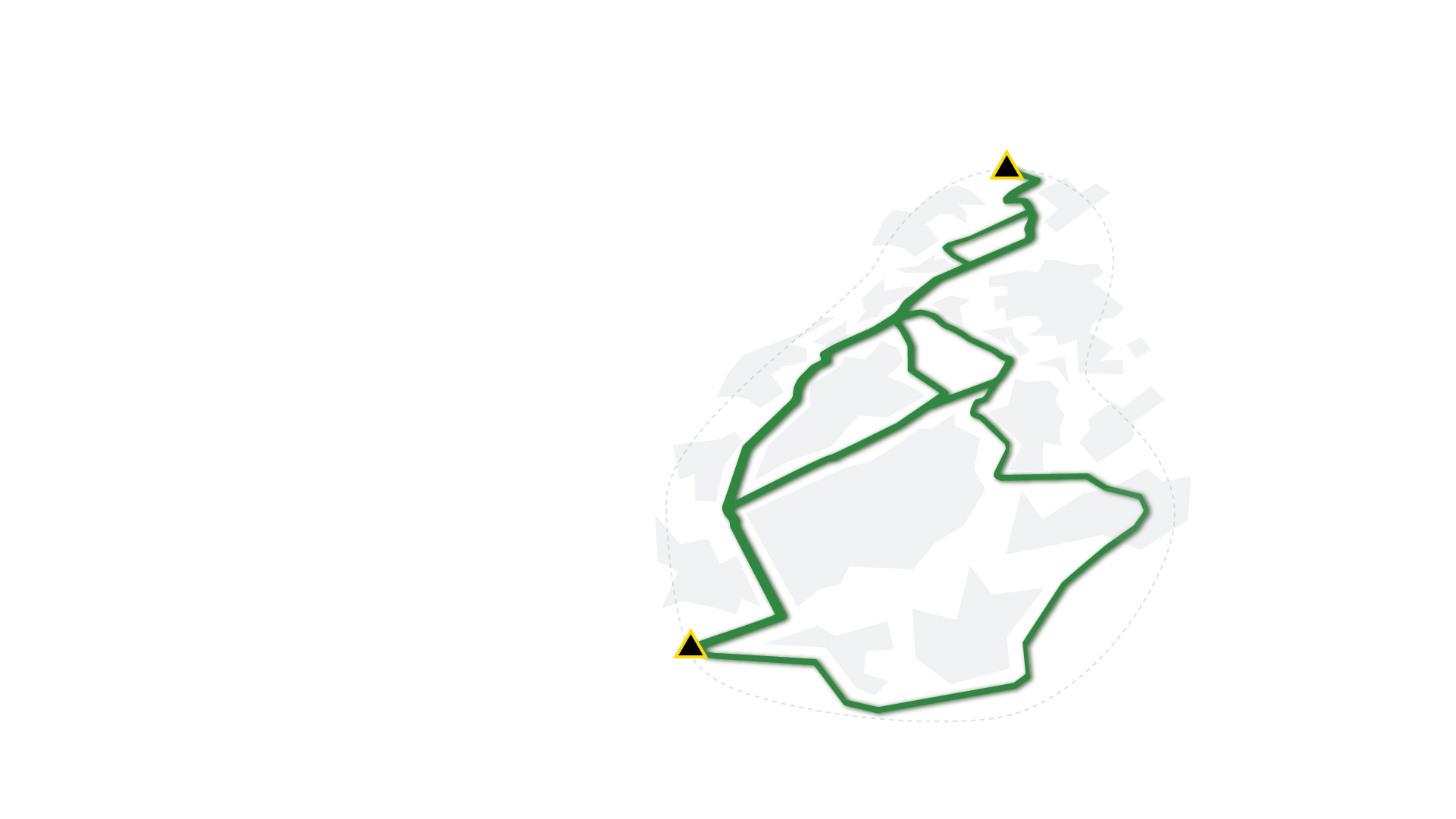
First, we develop a study area that includes the two end points of the project. The area between and immediately
surrounding these end points is defined as the Study Area.
Data Collection and Review
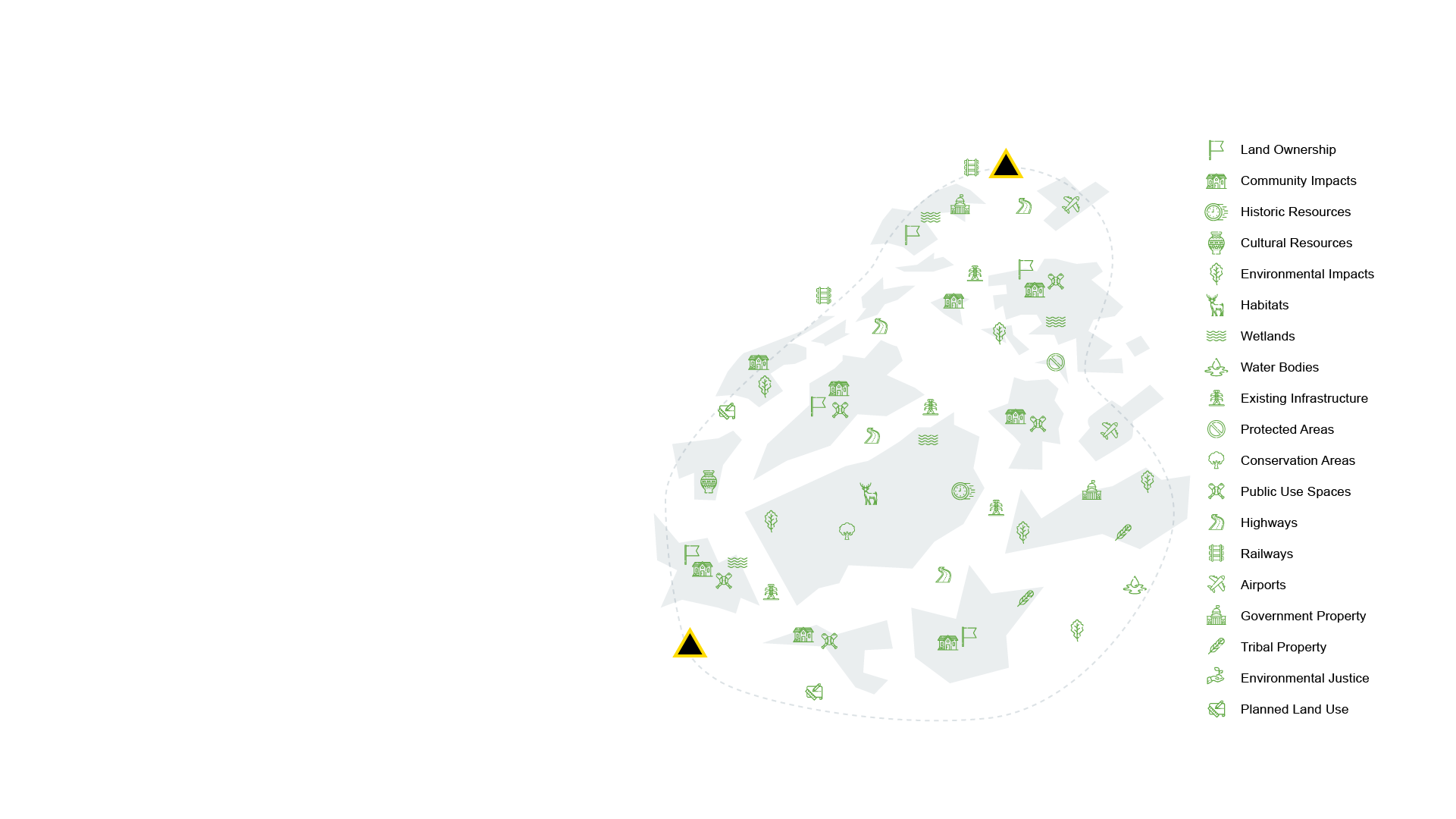
The study area is examined to determine areas of
significance in several different categories including
land ownership, community impacts, historic
resources, cultural resources, environmental
impacts, habitats, wetlands, waterbodies, existing
infrastructure, protected areas, conservation areas,
public use spaces, highways, railways, airports,
government property, tribal property, environmental
justice, planned land use, and more.
Opportunities vs Constraints
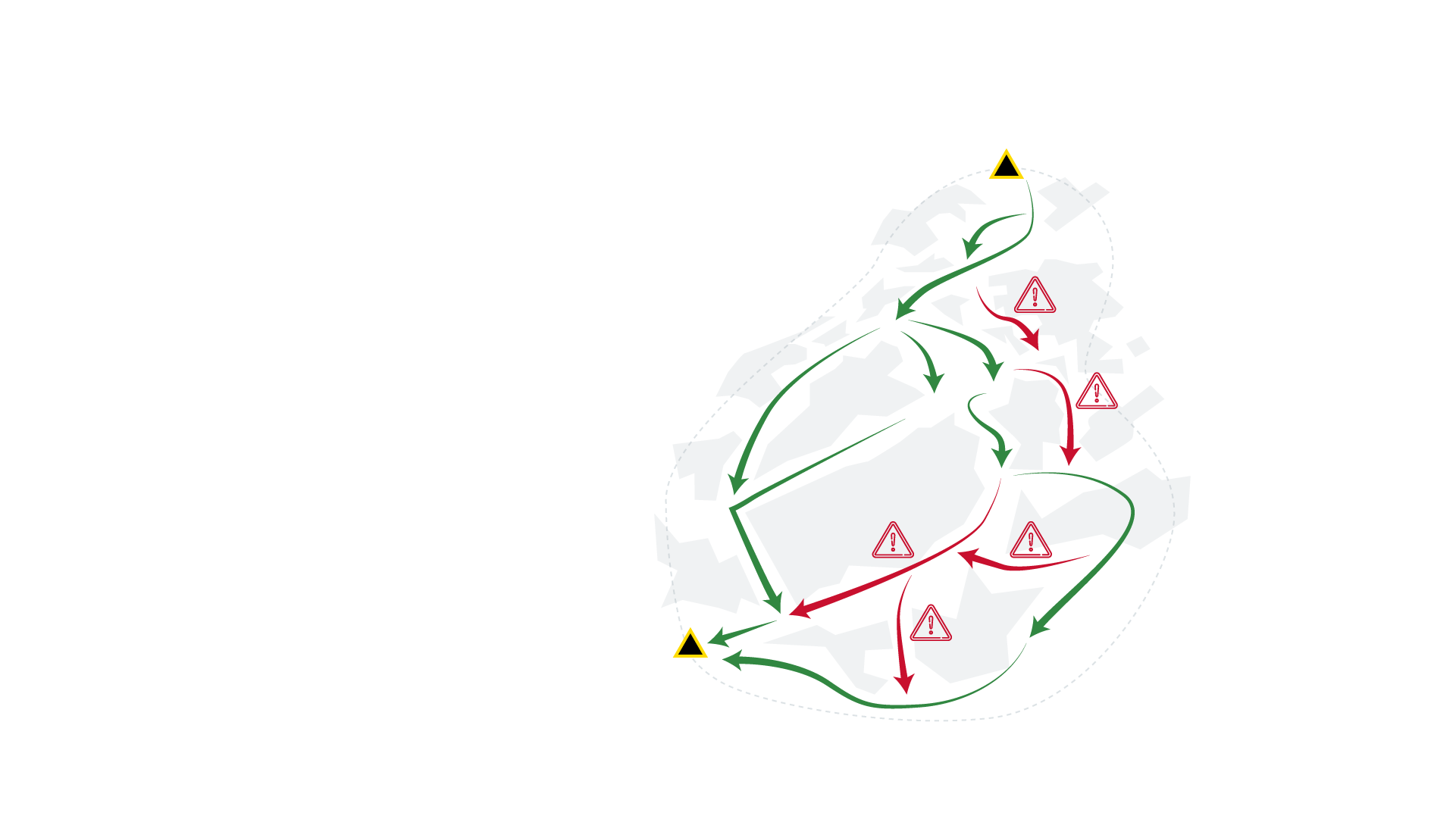
Using the collected data, we identify areas of
constraint. The line cannot be located in these areas
because of important features, like the location of an
airport. Areas of opportunity are areas that run in
parallel to existing infrastructure including transmission
lines, roads, railways, and open spaces that have not
been developed. Using this analysis, conceptual routes
are created.
Stakeholder Input
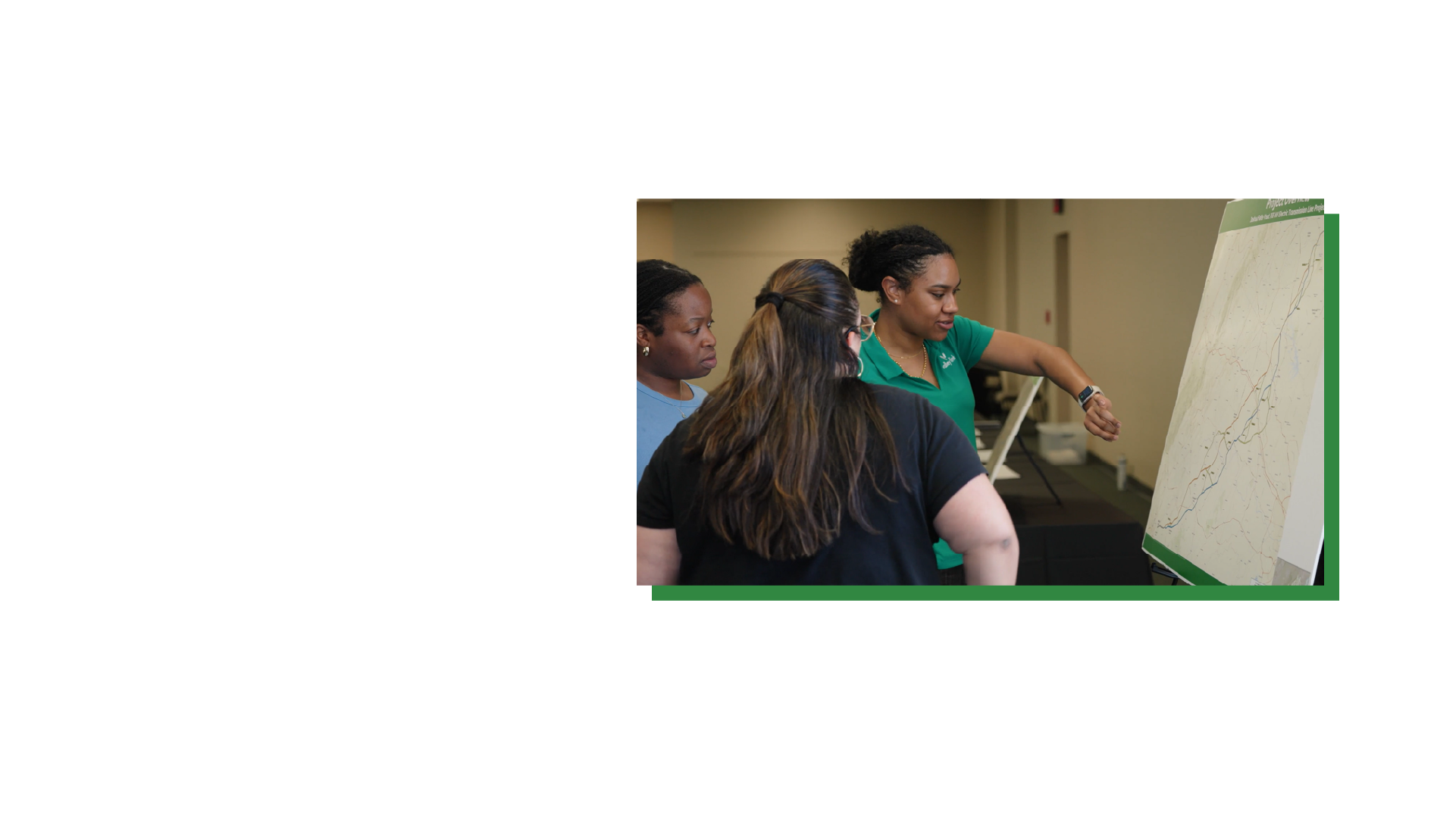
This information is reviewed with the help of local
governments, organizations, landowners, community
groups, Native American Tribes and other stakeholders
to determine if any of the conceptual routes need to be
eliminated or modified. This results in a web of potential
links called study segments.
Develop Alternative Routes
The study segments are reviewed with a wider
audience to refine, remove, or modify the links.
Public input helps to narrow down the possible
links into a few finalists or “alternative routes.”
Preferred Route
After several iterations of review with the public and
stakeholders, and with consideration for cost, impacts,
constructability, and time-to-construct, we determine a
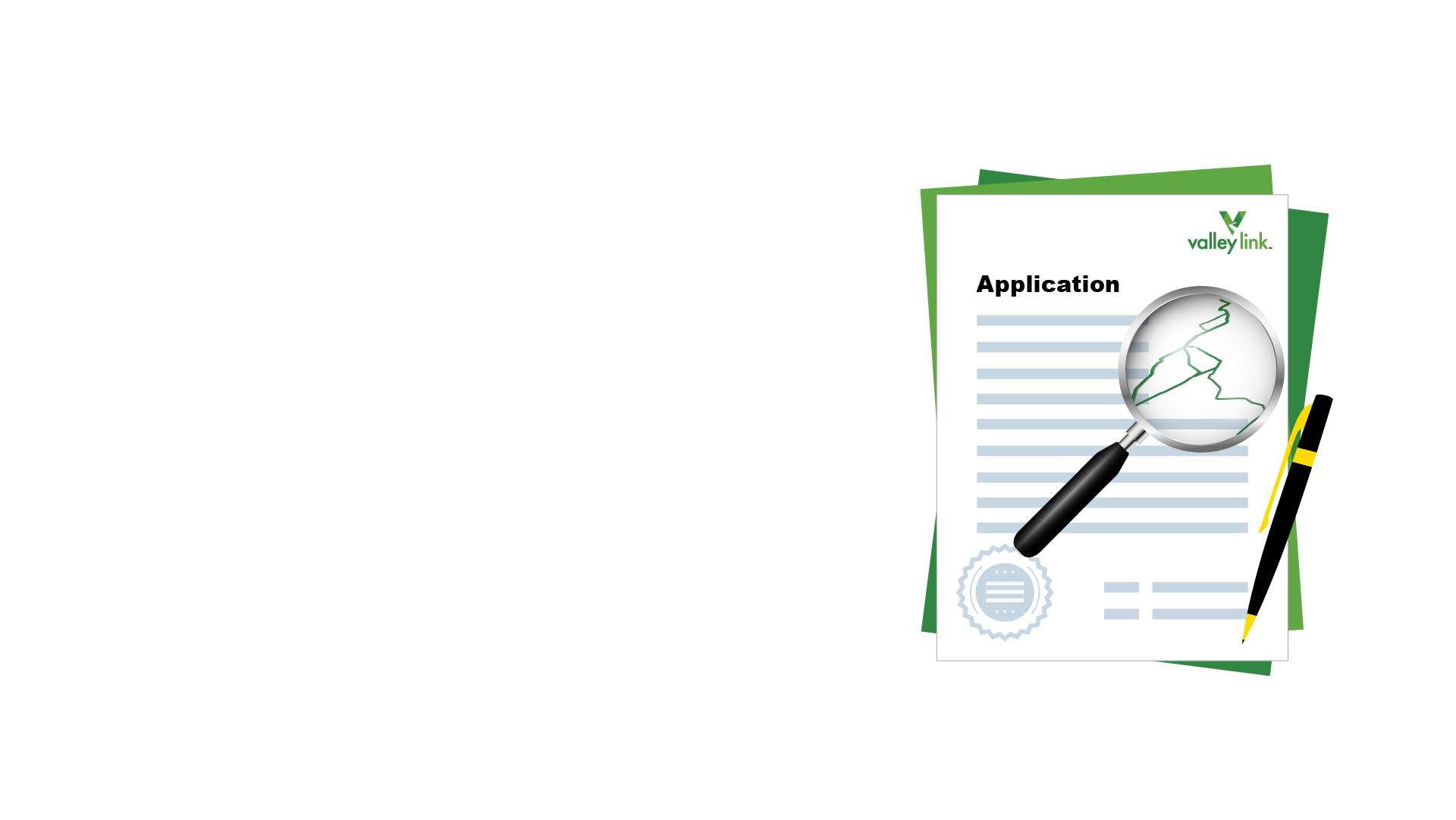
preferred route. This preferred route, along with several
refined alternatives, are submitted to state regulatory
bodies for review. Along with routes, regulatory bodies
will also review the need for the project and the steps
taken so far to refine our routing.
Regulatory Decision
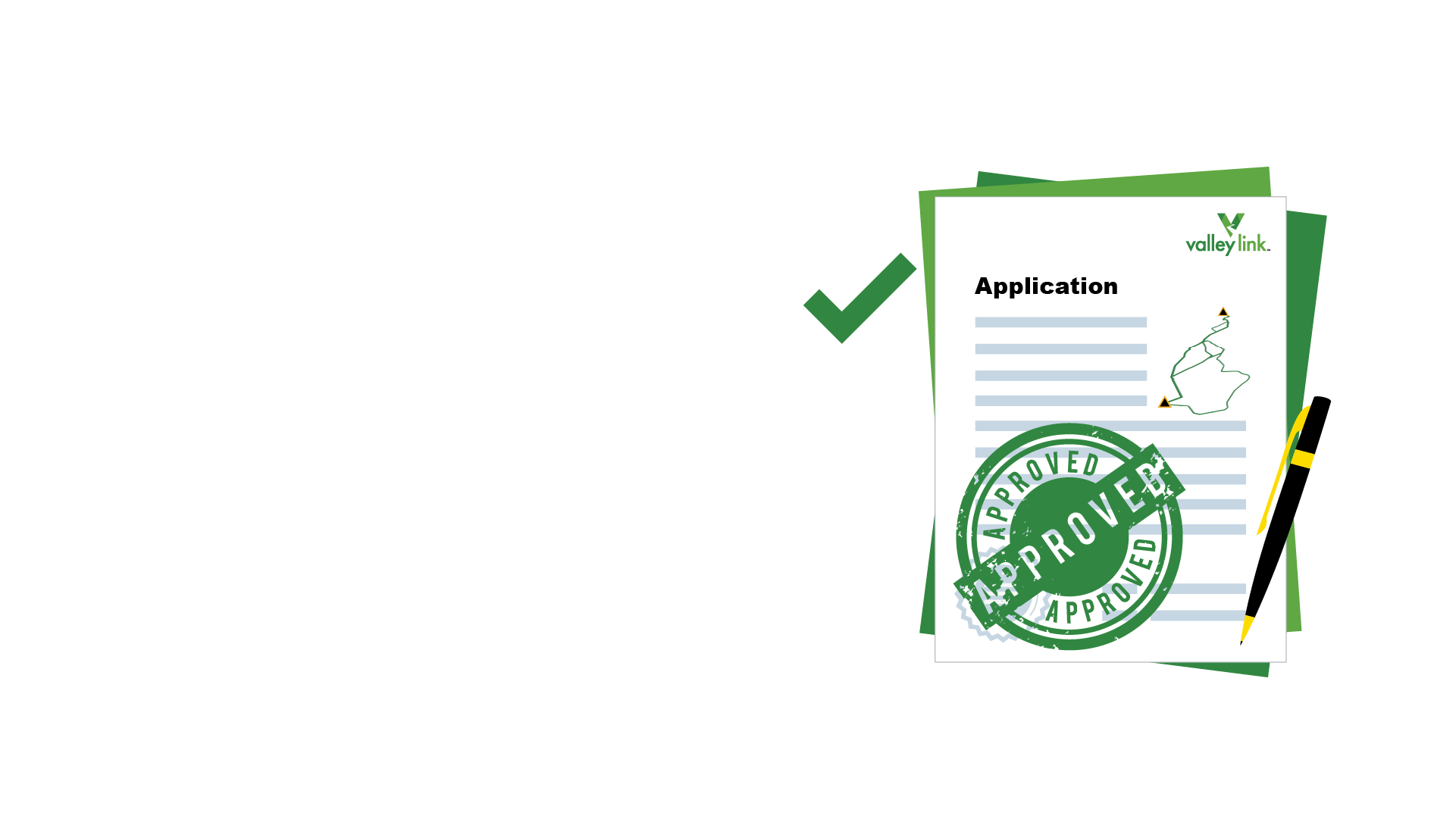
After careful review of the application, the state regulatory bodies determine the final route to be built.
WE WANT TO HEAR FROM YOU!
Your feedback is extremely important to us, and we have created a tool to help you submit location-based comments. To
explore the proposed route and give us your feedback, please
CLICK HERE